
Our Balance of Behaviour
When it comes to the koala, there's different cultures, environments experiences and information coming from the conservation and the captive sector from a range of different levels. Because even from the zoological institution, the bigger the staff infrastructure, the more distanced they become from the work itself, as they departmentalize the workload, this a form of disconnect. This means that those important micro steps fall away, which is very important when training new recruits. For some reason, this type of behaviour is considered of little relevance as its coming from the higher management. They are discriminating the workload itself, disconnecting the follow of the work, as we become box's workers.
I see
Over recent years, I have seen the rise of the importance of the
By the time, you finish your college degree, you own so much money to the government, they pretty much own you. It's a system that's built into their culture. So as parents they sometimes don't realize, their own subconscious "as if to say" I went through this pain, so you should too. Well everyone goes through growing pains some highlighted and some not. And this victimisation culture is everywhere, it's even subconsciously coming from your own parents. But again, there is a certain percentage in society who aren't aware of this culture or behaviour, and they have come from different circumstances. This can be successful
One of Australia's biggest industries which
Small business brings a combination of old and new school and depending on the task at hand, they have
This has had in my own backyard, while my advice wasn't taken, but I think my small conservation group, had a hind agenda, to read more log onto; Koala Behaviour in Mulgoa.
Why doesn't the local government acknowledge the work from the captivity sector that's been going on for 150 years or so? The captivity sector already taps into a relationship with the community anyway. Why not build on that? Why separate the work of conservation and paid professionals? This natural relationship between the community and the local wildlife parks and zoos has been happening since the opening of our first zoo in Australia and over the years the community has supported both industries of our wildlife parks and subsequent conservation efforts.
With an ever-increasing Australian population, where our native wildlife is going to impact our way of living, we need more transparency. Everyone across the community needs to be accountable for their actions and to their duty of care. And yes, it's not always going to be perfect, mistakes will happen along the way, but secrecy doesn't help. As these actions tend to repeat themselves. Everything needs to be addressed, especially as warmer winters and extreme weather patterns mean that we, as a society, need to be better prepared.
Koalas don't lie about their health. When they get sick, they tend to die quickly. Veterinarians who have written papers in the past can predict to the hour when a koala will die. They work in a way where things go wrong most of the time, yet, there is no outcry. Why? Maybe because of their good work and their credentials and the way they bring their information and good service to the community. And yet, they are more than willing to share their experiences as human interaction occurs in a manner that needs to be managed with transparency and openness. Because the biggest loser is always the koala, and by sharing these types of scary events to light, this type of behaviour is a positive step forward, and an incremental step towards the reversal of the demise of the koala. Their great work and written papers should be openly shared, and transform into a platform, such as websites to allow the common person, to understand a language that's suitable for everyone, especially new volunteers who's earning for the first time.
In my own backyard in the microcosm, this behaviour is missing, as the inexperience in the local level does not foster openness. An example is the two koalas who entered Mulgoa. No matter how they got there, this event is shrouded in secrecy. The relocated male koala is now under the control of the local conservationist and the information is now also under their control. They can hide any of their mistakes, as they have control of one male koala. They decided to keep his location a secret, which seems more of a political decision rather than one for the betterment of the koala.
To read more, and find out his location go
Acceptance
This last element is being accepted into the process by the current authorities who aren't willing now to see another perspective and would see these articles as confronting and challenging. Most of them who never really deal with koalas! For example, even me, who deals with koalas constantly, must adjust if I go on holiday because even that small absence forms a small disconnect because of the rapid ways in which the landscape changes and the dietary preference of the koala.
The Sydney area has changed so fast and this, combined with warming winters changes the decisions of today, which are based on past cultures' experiences and not current situations and facts. So, to hear someone like myself giving another viewpoint in today's current climate will be unsettling for them! I express my concerns in this matter because of what happened in Cape Otway. I wonder if the positioning of those koalas was for tourism and whether that constitutes a captive environment, not a conservation structure. This is mainly since the Victorian Government openly mentioned that they were first put there for tourism, which is very much like ANY OTHER CAPTIVITY SET-UP. So why hasn't the question been raised?
When koalas are placed in an environment with a natural form of fencing around them, isn't this considered a form of captivity? How's that any different from Wildlife Wonderland in Gippsland, where in 2013 (a year before the culling of Cape Otway had started), they were forced to close because their animals were being mistreated, and their operating licence wasn't renewed? Why are there two sets of rules? NSW has had the same situation here with the old Skippy show in Terry Hill which was closed for the same reason around
What is the future for our koalas? How will the future look if we don't ask the hard question NOW?
These are all valuable pieces of information just waiting to be connected in what I call "Balancing the Dots". Each incremental development is a "dot" and each one requires a balance of behaviour, and to join each "dot" is followed by layers of behaviour and knowledge, which is represented by "lines" and with each "line" creates
To move forward with a different vision for the koala we must dissect the two major parties, (CONSERVATION AND THE CAPTIVE SECTORS) and their actions, to constantly improve ourselves and our behaviour, to envision a different future. For this last article of this theme, it's all about connecting the dots and seeing the layers that are lines of the future! Because the answers we are searching for already exist. Koala Retreat is finishing this theme in an artistic way by celebrating Aboriginal paintings, as they already see how the micro fits with the macro, by the expression they perform in their art! Their simplistic approach to art using dots and
Or maybe a better explanation is another level of understanding, and another dimension that can't be fully understood or measured today, but it's there waiting, as society slowly reveals itself and its fallings and achievements. Because as a society we are still looking for answers, but we so disconnected in some aspects and connect in others. Some of us see it clearly and some don't, and some are trying. Australia's indigenous culture helps us look closer because the answers are already there!
Indigenous art shows us that we are moving in the right direction. Sometimes we all have trouble explaining ourselves in a verbal language- not knowing how to say things. Our brains and knowledge are still limited today, but art and especially indigenous art of Australia can cut right through all barriers, explaining in a far more advanced way. To me, it's like another dimension of time!
Cleland Conservation Park in South Australia acknowledge their traditional custodians with this beautiful picture on their website, and so do we at Koala Retreat Consultancy. Acknowledging them at http://www.clelandwildlifepark.sa.gov.au/Home
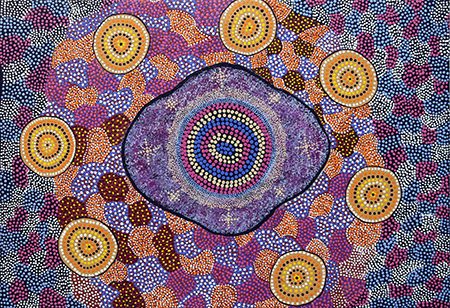
I wish to highlight this form of art because the more you see the more it speaks to you. I personally like all forms of indigenous art, it's simple yet dynamic because this practice allows your brain to visualize the future with a feeling of freedom if done with the backdrop of goodwill.
Below is an attachment. I was trying to pick one artist out of many, but in the end, how can you when all these artists practice their art as a form of meditation, allowing themselves to let go. I am acknowledging my appreciation of every and each artist on this website. To see more, visit this website @ https://japingkaaboriginalart.com/artists/
Article 25, "Big or Best", is the start of the third theme, "the question is" can we do both?
52 Articles, 4 themes 1 story
www.koalaretreat.com


