
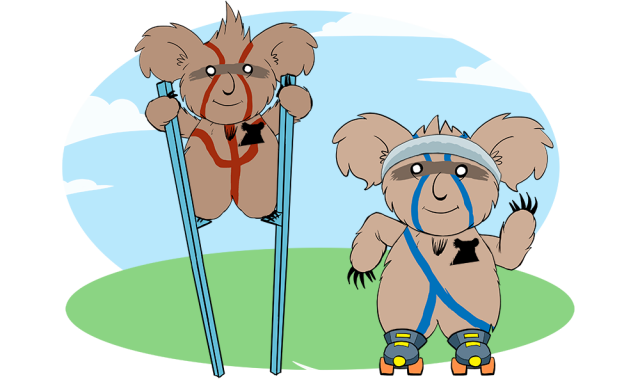
Introduction to Big or Best
To move forward, we will need a combination of big ideas and best practices in the way we manage (and pass on) our work in a fast-paced lifestyle, and in the way that we understand what's expected of staff (and duties) in both conservation and captivity roles. Part of the institutions' role throughout the year is knowing when to apply big ideas with
The word "Big" refers to several things such as the size of land, ideas generated and institutional/ businesses operations. This type of language is easy to communicate to the public, especially with many animals on display. However, that doesn't mean you have the best set-up.
Most of the time, when a Zoo or any organisation promotes that they are the biggest (whether it be in volume, land size, animal size, staff size etc.) it is irrelevant if they don't feel supported by top management in financial and decision making. To the lower staff, this translates to a lack of respect. But for top management, it's a different set of perspectives, priorities and focus. While in some cases, communication is irrelevant to them (they don't see the need to explain their decision-making to middle and lower staff members). So, these different layers and priorities create friction between the different understandings of the purer purpose, of both housing and wildlife conservation. So, dissent slowly sets in, and filters down to middle-management and has a cascading effect on the entire organisation.
This is particularly true if upper management
The word "Best" refers to the practices and vision in animal husbandry and welfare This can be of both staff and animals. Many people don't think that these two components big or best are linked, however, it is essential that staff feel secure and safe in their roles and have a clear purpose in the future. Planning is essential: both on a
Looking at the different layers of Best Practices
Smaller institutions generally find it easier to manage this dynamic, as there is a relatively little separation between low-level and high-level jobs. These smaller institutions usually have a clear vision and business plan and are motivated to become the best institution there is. The staff generally feel that they have plenty of autonomy in their roles and they also have meaningful roles. Such latitude creates a better culture and a better life for both animals and humans. Smaller operations are much more flexible in the way they carry out their roles, thus giving their captive animals more mental
Medium-to-Large operations have their advantages and disadvantages when working in a range of environments, including the different layers in management teams, human behaviour and competitive nature can work for you and against you, which can also generate close-knit groups. In terms of OUR human behaviour,
These may be minor but rarely spoken about. For a successful transition from small to medium to a large zoological set-up, constant vigilance is required to ensure the best performances of staff. Again, a positive work environment from the top down is essential for a business to evolve in the right direction. In this case, humour, and attentiveness can go a long way.
Big koala operations can also refer to the quantity of a resource, such as food. Quantity can be a fine balancing act of more versus less, fast versus slow. Some koala operations fail to understand the finer details and methodical processes of Big. Daily operations can be broken down into pieces, knowing when quantity is needed and not needed. Quantity is an incredibly important aspect of any operation and mistakes can have major consequences when dealing with koala infrastructure in medium and large koala numbers. Best koala operations can refer to the quality of a resource, such as food. Quality balances the value of food, knowing
So Best also means maintaining the best standards of behaviour within ourselves, as well as the outcome you're trying to create for your koala. An example of this can be viewed on the five cogwheels on the Koala Retreat Professional services page.
The key to working with animals (and even without them) is finding harmony and the balance between business and animal (or human) welfare. To find that balance we need to explore our own behaviour and how our own small behavioural changes can affect the entire system.
Such methodology compliments all levels of the business structure. Using this holistic approach, relationships across the business will be strengthened and will be reflected in the health and wellbeing of the animals and staff.
BIG Versus BEST as an Industry
There are many unknowns in this industry, and as the Australian population grows, so too does the demand for more zoos and wildlife parks. At the same time, a decrease in our native landscape can cause an increase in the demand
A Growing Industry
With the ongoing growth in West Sydney, there has also been the introduction of the new safari zoo in Blacktown. What's going to happen in the long term in Blacktown (as is happening right now even before the gates open) is more jobs become available with the introduction of a new business. The wildlife industry will be affected by this introduction. In the short term, a vacuum will arise as senior staff depart from their current jobs for an opportunity to experience working in a new environment, but the jobs they leave behind will only to be replaced by inexperienced staff. This shuffle has already begun within an industry at its weakest. It's a form of musical chairs. However, because this industry has already had a fast turnover of staff, industry outsiders may not even notice. The industry itself has a major bottleneck system: meaning the roles young staff are able to achieve long-term, slowly moves into a loss of interest in their work and subsequent disappointment. The smiles when they first arrive seem to disappear after the first few years.
Then you see a different expression, one that reveals a feeling of entrapment, particularly if they didn't have a good experience in the education system. The average keeper in smaller wildlife operations usually leaves after 10 or more years after building their foundation of knowledge. As they generally leave school around the age of 15-16 or so and they don't see a long-term future in this industry anymore or see opportunities to climb the leadership ladder into management.
Some become withdrawn as they feel trapped with such mundane duties so early in their life. They can also feel isolated by the low levels of interaction and lack of exit strategy. They also must deal with the increasing cost of living in the Sydney Basin area.
Staff tend to go in one of four directions:
1. They leave altogether;
2. They study a higher form of education and push their way into another industry;
3. They stay in the same industry, and;
4. They leave their current position for a different environment under different management and have a different role; or, they will stay and become resentful as they age but still work the same routine while others around them move past them in the corporate chain.
These days, professionalism comes in many forms and knowledge and experience is one's own intellectual property. The problem with some wildlife institutions, is with a high turn-over of staff, that they match that turnover with an equal amount of employing prevention and risk-management measures.
But some institutions choose to use the younger, inexperienced kids, who were eager to and enter the industry but weren't properly trained in a changing landscape. They are unaware of the industry standards of the pass and unfortunately don't see that they are unwilling participants contributing to a negatively changing storyline in animal conservation across both the captive and conservation sectors.
Next Article: Dissecting the traditional role of the koala husbandry.
Looking closely at the meaning of Big versus Best, and how we can maintain the two in a working relationship.
52 articles- 4 themes- 1 story, www.koalaretreat/blog.com


