
Australian's have the ability, to redesign our future, because of our massive landscape, by starting from scratch, we can restructuring another economical system where THE PLATFORM ITSELF becomes the BIGGEST WINNER, not any one individual living organism or Nonliving organism, but a combination and balance of both.
We need to transform the way that humanity understands the koala, and re-evaluate the way we live amongst our wildlife. We, as a society, have zoning laws because we understand that we need to protect and control our own behaviour as well as our national parks and oceans because there is so many of us!
Zoning Laws and laws in general are in place because we still have a small percentage of society that, given the opportunity, will take advantage of situations for their personal and professional gain. The reason why developed countries have so much red-tape is due to the prevalence of people who try to take advantage where they can. It can take a monument effort to change laws and requires the coming together of numerous governmental departments and sectors to sort it all out! This only happens if the larger community becomes aware of such loop-holes.
This means that we should never stop asking questions and striving for improvement in our understandings of our treatment towards our rare landscapes. The reason we have these laws is because we have a limited of understanding of the ways in which we should build a proper platform which exposes poor behaviour and allows us to reimagine everything we know about our wildlife and koalas. You will be surprised by how easily and comfortably we can live with nature if we have the right type of platform that allows us flexibility to move forward in-conjunction with our environment!
We have to look at both the macro (the outer environment) and the micro (the inner world and inner part of ourselves, the way we work and live). It could be said in the zoological industry that by searching for more answers, we have allowed the zoo to evolve into a moving zoo (see article 6) where the future zoos of tomorrow look nothing like the zoo of today.
The overall understanding in the zoological industry is one of micro and macro-economics. Space is better for the animals, but not for the financial side of managing and creating a profit in order to reinvest. Dealing with unknown and unexpected financial costs while running such a large collection of animals can be taxing. But in the majority of cases, this is where we are headed. That is why we need to find those micro solutions that are in-line with better values – this means more space for the animals to roam at their pleasure, while we continue to study them from a distance. Adding another layer is the excitement of drawing families and guests which maintains the commerce structure rolling forward. Creating the right balance of control in the macro, while at the same time allow for uncontrolled behaviour in the micro, this can be achieve with the koala and generally most of Australian wildlife. The way to go about this, at the start is creating a very strict- form of behavior FROM THE BEGINNING, with a platform of the future that allows us"Society" avenues to let go, as each stage of development is achieve.
According to the Australian Industry Report, tourism set new records in 2016 with 7.7 million tourists visiting Australia in the twelve months to March 2016 and values for tourism-related services grew by 11.2 per cent in 2015–16 to $43.6 billion.
The services industry is the largest part of the Australian economy, representing over 60 per cent of Gross Domestic Product. Within the services industry, Personal Travel Services is Australia's second largest Services export, worth $16.5 billion. With the Australian koala representing one of the biggest draws for international tourism, their contribution to Australian society is certainly significant.
Missed Opportunities
The koala represents an incredible opportunity for Australia in its ability to draw crowds, ignite foreign tourism, unite communities and sectors, generate revenue and jobs and bring industry players together.
However, without a cohesive strategy across the koala industry, Australia risks losing an incredible growth opportunity. As outlined in previous articles, a cohesive strategy can only be developed if it draws on the expertise and knowledge of a diverse and wide-ranging group of people who are willing to collaborate and work through their differences.
There is opportunity for all industries – both man-made and natural – to grow and prosper, both at an individual and a commercial level.
A Strategy for the Future
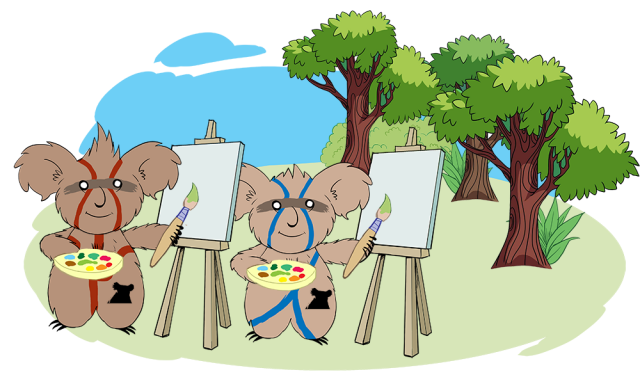
Starting with a blank canvas, Koala Retreat has defined a strategy to slowly re-introduce the industrial and commercial sectors with the hope that they can work hand-in-hand with the koala for the long-term benefit of all. The wildlife and koala industries need to be able to embrace a supportive role, rather than a dominant and opposing role in key decisions across government and industry.
A prime example of this is the Australian Koala Foundation (AKF), who approaches everything with the intent of creating conflict and friction, rather than advocating for collaborative, community responses to key issues. If they simply removed the 'us versus them' mentality they would achieve much more successful results.
There is a certain element of arrogance that comes with their attitude of 'only a non-profit organisation will save the day', 'mankind can't be trusted with the money they make', or 'somehow it's wrong to commercialise the Australia icon'. Not only are these statements untrue, but they are harmful to an industry that has largely funded the conservation and protection of koalas (and other wildlife) in Australia. In addition to this, competition in the business market is an incredible driving force for innovation.
Our next Article: 38
52 articles 4 themes 1 story www.koalaretreat.com