
Koala Energy and Enrichment
This article is part of a series. To read part one, click here.
Koalas are often labelled as sleepy marsupials that spend most of their lives in a deep slumber. However, this characterisation is quite far from the truth. The captive koala, given the right diet and nutrients, is a robust and active animal that can thrive off just 15 hours sleep per day, rather than the 20-plus hours that mainstream culture tells us.
Wild koalas, for example, exhibit livelier behaviour, remaining active for large chunks of the day as they forage and collect food from hundreds of different trees. Their diverse diet, which includes leaves sources from trees from a range of locations, soil-types, seasons and weather conditions provides them with the ideal amount of nutrients to ensure they are prospering physically, mentally and emotionally.
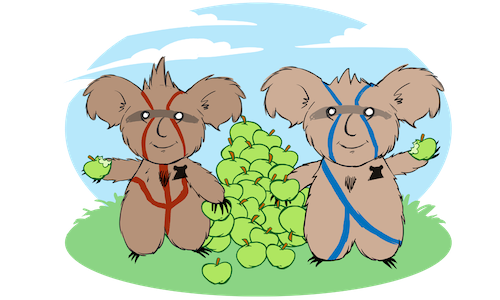
There is a myth that the koala can only eat from a limited amount of tree species – however, this couldn't be further from the truth. For example, there have even been a number of reports revealing that koalas eat a non-eucalyptus diet when survival is threatened – during drought, fire, flooding or natural disaster. We also have documented proof of koalas eating apples, when, in 1915, an Australian digger sailing to Egypt to prepare for war, brought a koala with him. The koala survived on a diet solely consisting of apples, before being taken to the Egyptian Zoo.
With recent times, and the invention of smart phones, and platforms such as You Tube, helps to educate people around the world, that the above story isn't unique.
(The video below shows a koala, happily eating an apple.)
If humanity is consistent at anything, it is being inconsistent. This is a key barrier to koala welfare, and one that must be overcome. When overseeing the welfare of a captive koala/koalas, it is our job to ensure that we are providing physical, mental and emotional enrichment that encourages the highest health and wellbeing standards. Establishing optimal health for the captive koala requires a diverse and nutritious source of field-sourced food, a reliable daily routine, emotionally stable and calm staff members and handlers, and a harmonious and safe environment.
If all of these elements are implemented, then the koala has the best chance of thriving. Not only is this the most advantageous outcome for welfare purposes, but it is simply good business.
Commerce and the Healthy Koala
A robust, healthy, active and happy koala is a koala that tourists and visitors will flock to see. The more energy a koala has, the more endearing they are to paying visitors. A healthy and robust koala will be more curious, active, lively, calm and stable, which is particularly important when paying visitors and tourists are requesting photographs and 'koala cuddles'.
Everything from the design of the park to the daily operations and the park opening and closing hours is suited around humans needs, rather than the needs of the animal. Over time, zoological parks have prioritised commerce over welfare, (rather than allowing them to work in harmony) and the standards of food sourcing began to dwindle. Today, the industry fails to challenge itself and has prioritised plantation-sourced food over field-sourced food, and this has created a notable drop in the health, wellbeing and behaviour of the koala.
Next Article: Part-4 Talks about Koalas the diet in a captivity situation.


