
Indifferent Does Not Mean Out of Touch
This article is part of a series. If you missed Part 3, please click here.
Within each individual industry, there is a 'code' or 'culture' that is generally apparent among the staff. In my industry, I have developed a thick-skin and my attitude may appear unaffected or indifferent, but this certainly does not mean that I do not love what I do or that I don't feel passionate and sensitive about the industry I work in. Indifference usually means that you are completely unconcerned and uninterested in a situation. However, certain industries, especially ones that require hard physical or emotional labour, tend to create qualities in people that may appear like indifference.
Koala Codes
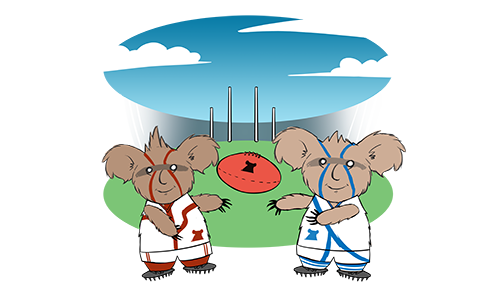
For example, in many sports, particularly the cultural and social codes in football, the normal emotional response among teammates is to show excitement when their team wins, to show frustration when the umpire makes an unfair call, or to show sadness when their team loses. These are normal emotional states and behaviours witnessed within a sporting team.
These 'codes' also exist within the koala industry. My approach is unemotional and practical; I don't see koalas as cute and cuddly and I don't have the same reaction to koalas that many people outside the industry do (such as warm and fuzzy feelings like happiness and excitement). This does not mean that I am not passionate about the koala and the industry itself, but it means that I am dedicated and focused on my work. Each day, myself and others in the industry will quietly and determinedly go about our jobs. This is the nature of my job and the nature of the industry.
Think of the God of AFL, Gary Ablett Senior. His work was celebrated across the country, and people outside the industry would imagine his career as exciting, which it certainly was. But for him, it was also a job – one that he went to every day with a practical sense and a determination. He may have seemed indifferent to some, but really, he was taking his job seriously and committing to it entirely. Of course, every individual is different. Stars such as Ron Barassi and Ted Whitten were much louder and passionate and more open, with big inspiring speeches. They put themselves forward as leaders, and were celebrated while they were playing and after they retired. But in every industry in every country there is a code and an expectation from both inside and outside the industry – and sometimes, the expectation doesn't always match the reality.
A misunderstood profession
When talking to people outside the industry, they will want to hear the cute, funny and interesting koala stories, and sometimes I may disappoint them with my response. Because this industry is not about 'cute' and 'funny'. It is a profession that requires a great deal of hard work and faces many challenges and when I talk about my job, I tell it like it really is: it is a serious profession that is often misunderstood.
Across the captive management industry (as well as the environmental and wildlife industries), I have many friends and colleagues who have experienced similar frustration when trying to explain what they do for a living. Whether they work with tigers, dolphins or koalas, they all feel that people make incorrect assumptions about their work and expect emotional responses filled with exciting and unique stories of koala cuddles, dolphin swims and tiger cub stories. But this is not what our work is about. And when I explain what I actually do - which is usually a methodical and detailed reply discussing the misunderstood dietary needs and labour-intensity of the koala as well as the methods behind sourcing koala food and challenges to the koala industry. Soon into my story I notice that the person who asked me what I do has begun glancing at their wrist – forgetting that they don't even have a watch. People usually lose interest or change the subject. This has meant that for me, and many of my colleagues, we find it safer to simply say that we have a small business.
Misunderstood
The reason for my 'indifference', which is really just a lack of animation and over-excitement when talking about my job, is because I am committed and fully focussed on my job and my work. I take it seriously.
Koalas are labour-intensive vegetarians whose dietary requirements and food sourcing isn't fully understood. The amount of work involved (which is a form of agriculture, farming and field work combined) is intense, expensive and time-consuming.
Koalas living at a fixed address have similar requirements to humans; they need physical, nutritional and mental enrichment. Like humans, they don't want to eat the same food over and over again.
So, imagine eating a bowl of spaghetti Bolognese and compare it to a koala who is eating their most common food, the red gum (or, Eucalyptus tereticornis). Now, if it is in good form, meaning its leaves have a high level of moisture it could be compared to spaghetti Bolognese that has been made using fresh ingredients. If the red gum has red-tipped leaves, well, that is the equivalent of having some tasty cheese sprinkled on top of your spaghetti!
Different sorts of pasta (such as spaghetti or fettuccini) can be compared to the different sort of leaves that a koala eats. While the different sauces (such as Bolognese or carbonara) can be compared to the different characteristics of soil that is available in different regions that a koala's food is sourced from. Koalas are highly sensitive to changes in their food. Sourcing food from a variety of areas and weather conditions ensures that the koala's diet is never boring
So, if you collect red-gum down south of your area, you may wish to collect the red-gum from the north a few days later. In doing this, you are creating that weekly depth and variety in your collection and ensuring mental enrichment value for your koalas.